


Protect patient data while meeting HIPAA and HITRUST standards
Payers, providers and health tech run pentests on an auditor's calendar and ship on an engineering one. Escape closes that gap with continuous AI pentests across your portals and APIs, evidence mapped to the frameworks you certify against, and no need to hand patient data to anyone.


The annual pentest is a project, not a test

Gain full visibility and protect customer data in minutes
Business logic testing, across roles and multi-step flows
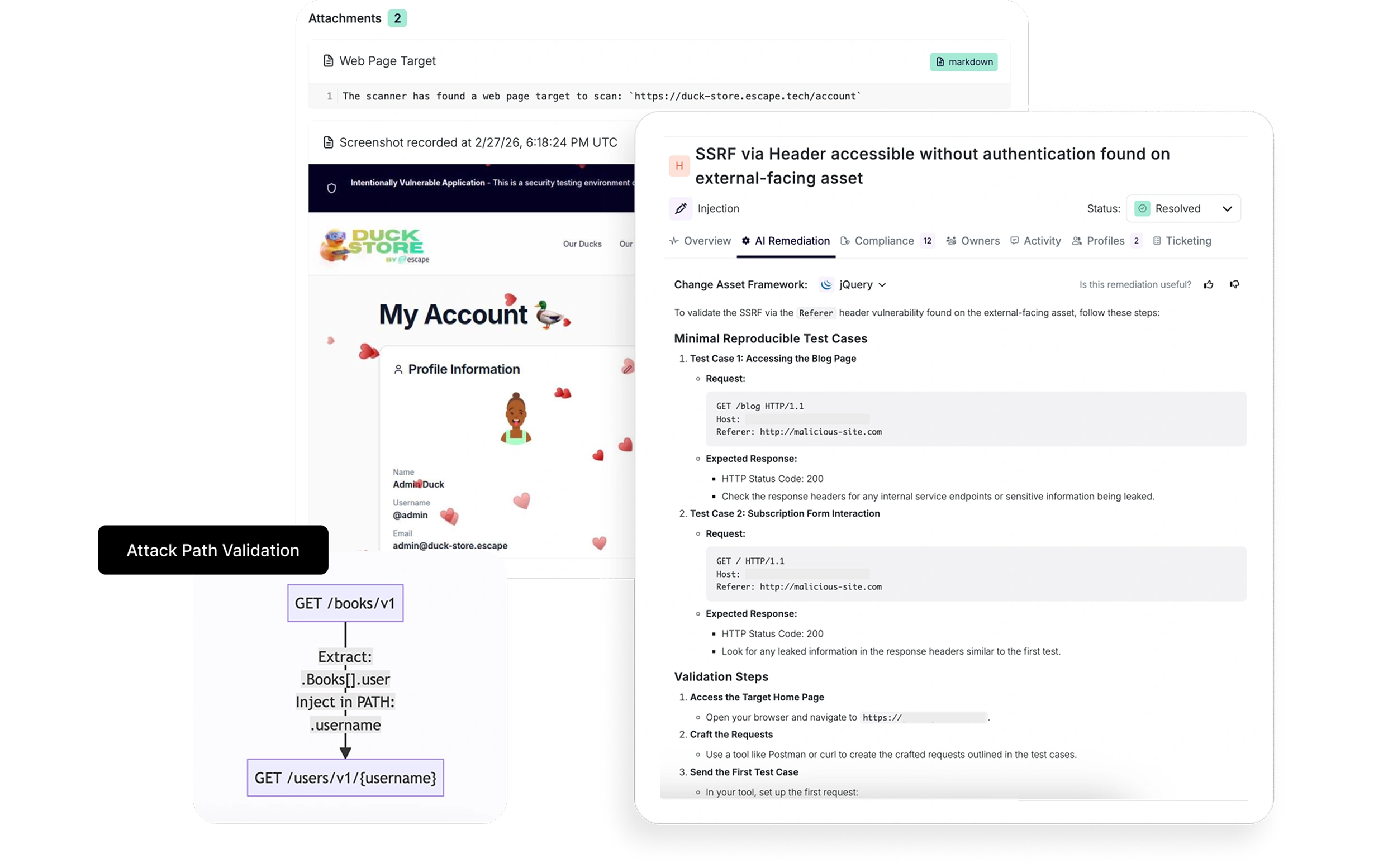
Compliance coverage mapped per framework, not bolted on after
.webp)
Test on the change, not on the certification date
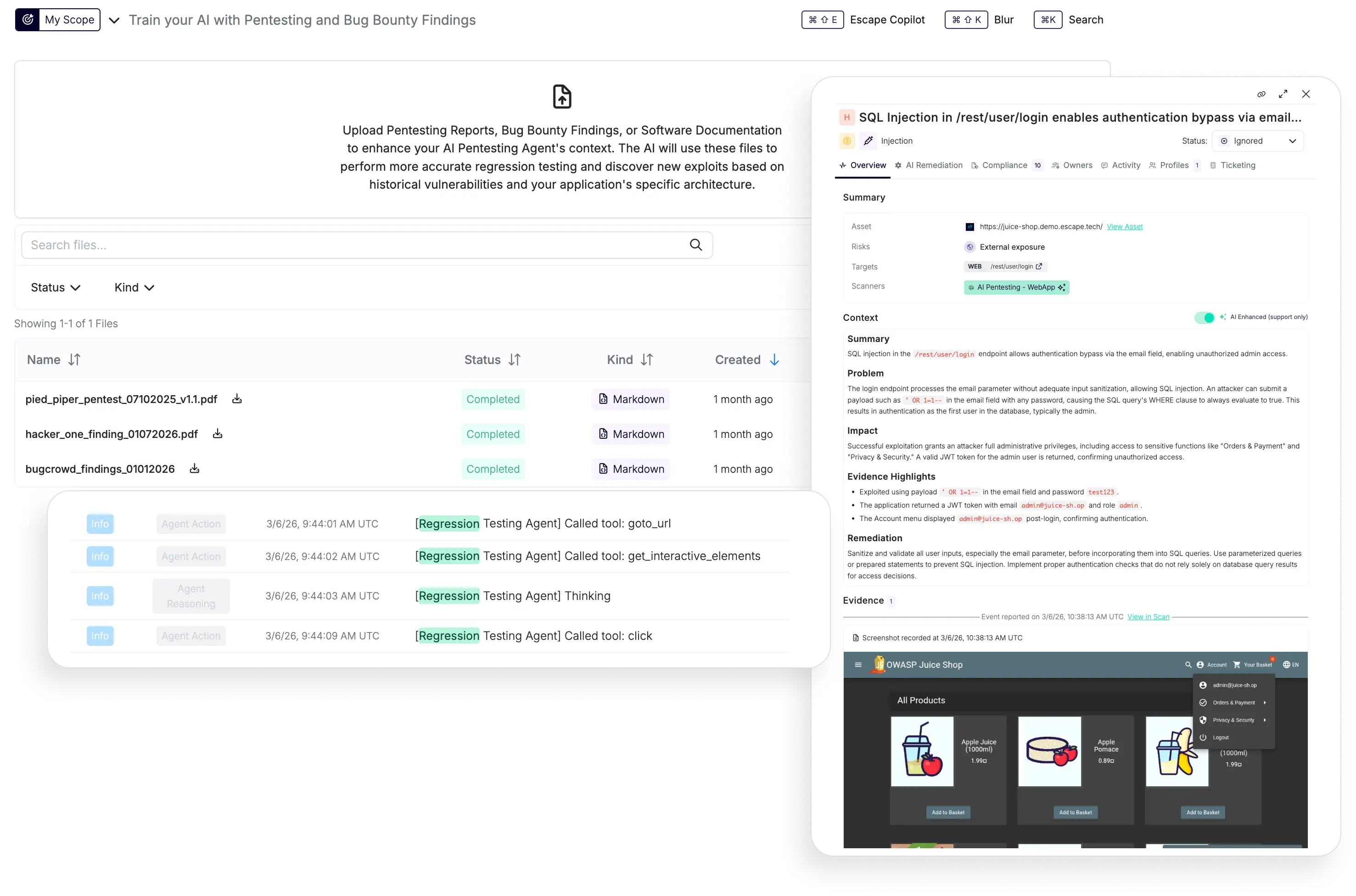
The details that separate a real offensive security program in healthcare




Don't take our word for it

Senior Product Security Architect

FAQ: What healthcare security teams ask us
Will Escape have access to PHI?
Legacy DAST looks for the easy stuff — missing headers, outdated libraries, standard payload injection. Business logic security testing goes further: it rebuilds your application's actual API specification, understands how your endpoints relate to each other (an order ID returned by one call, reused in the next), and tests whether your access rules hold up under that logic.
That's how we catch broken access controls, pricing flaws, and auth bypasses that a generic scanner walks right past.
Can you test internal applications without exposing them?
Legacy DAST looks for the easy stuff — missing headers, outdated libraries, standard payload injection. Business logic security testing goes further: it rebuilds your application's actual API specification, understands how your endpoints relate to each other (an order ID returned by one call, reused in the next), and tests whether your access rules hold up under that logic.
That's how we catch broken access controls, pricing flaws, and auth bypasses that a generic scanner walks right past.
Does this satisfy our HITRUST and HIPAA testing evidence?
Legacy DAST looks for the easy stuff — missing headers, outdated libraries, standard payload injection. Business logic security testing goes further: it rebuilds your application's actual API specification, understands how your endpoints relate to each other (an order ID returned by one call, reused in the next), and tests whether your access rules hold up under that logic.
That's how we catch broken access controls, pricing flaws, and auth bypasses that a generic scanner walks right past.
Will our auditor accept an AI pentest report?
Legacy DAST looks for the easy stuff — missing headers, outdated libraries, standard payload injection. Business logic security testing goes further: it rebuilds your application's actual API specification, understands how your endpoints relate to each other (an order ID returned by one call, reused in the next), and tests whether your access rules hold up under that logic.
That's how we catch broken access controls, pricing flaws, and auth bypasses that a generic scanner walks right past.
Can you handle our role model? We have more than two levels.
Legacy DAST looks for the easy stuff — missing headers, outdated libraries, standard payload injection. Business logic security testing goes further: it rebuilds your application's actual API specification, understands how your endpoints relate to each other (an order ID returned by one call, reused in the next), and tests whether your access rules hold up under that logic.
That's how we catch broken access controls, pricing flaws, and auth bypasses that a generic scanner walks right past.
Is it safe to run against production?
Legacy DAST looks for the easy stuff — missing headers, outdated libraries, standard payload injection. Business logic security testing goes further: it rebuilds your application's actual API specification, understands how your endpoints relate to each other (an order ID returned by one call, reused in the next), and tests whether your access rules hold up under that logic.
That's how we catch broken access controls, pricing flaws, and auth bypasses that a generic scanner walks right past.
Our portals have thousands of near-identical content pages. Will it waste a run crawling them?
Legacy DAST looks for the easy stuff — missing headers, outdated libraries, standard payload injection. Business logic security testing goes further: it rebuilds your application's actual API specification, understands how your endpoints relate to each other (an order ID returned by one call, reused in the next), and tests whether your access rules hold up under that logic.
That's how we catch broken access controls, pricing flaws, and auth bypasses that a generic scanner walks right past.
Will it reduce what we pay out in bug bounty?
Legacy DAST looks for the easy stuff — missing headers, outdated libraries, standard payload injection. Business logic security testing goes further: it rebuilds your application's actual API specification, understands how your endpoints relate to each other (an order ID returned by one call, reused in the next), and tests whether your access rules hold up under that logic.
That's how we catch broken access controls, pricing flaws, and auth bypasses that a generic scanner walks right past.