
Pentest your APIs every release, not every year
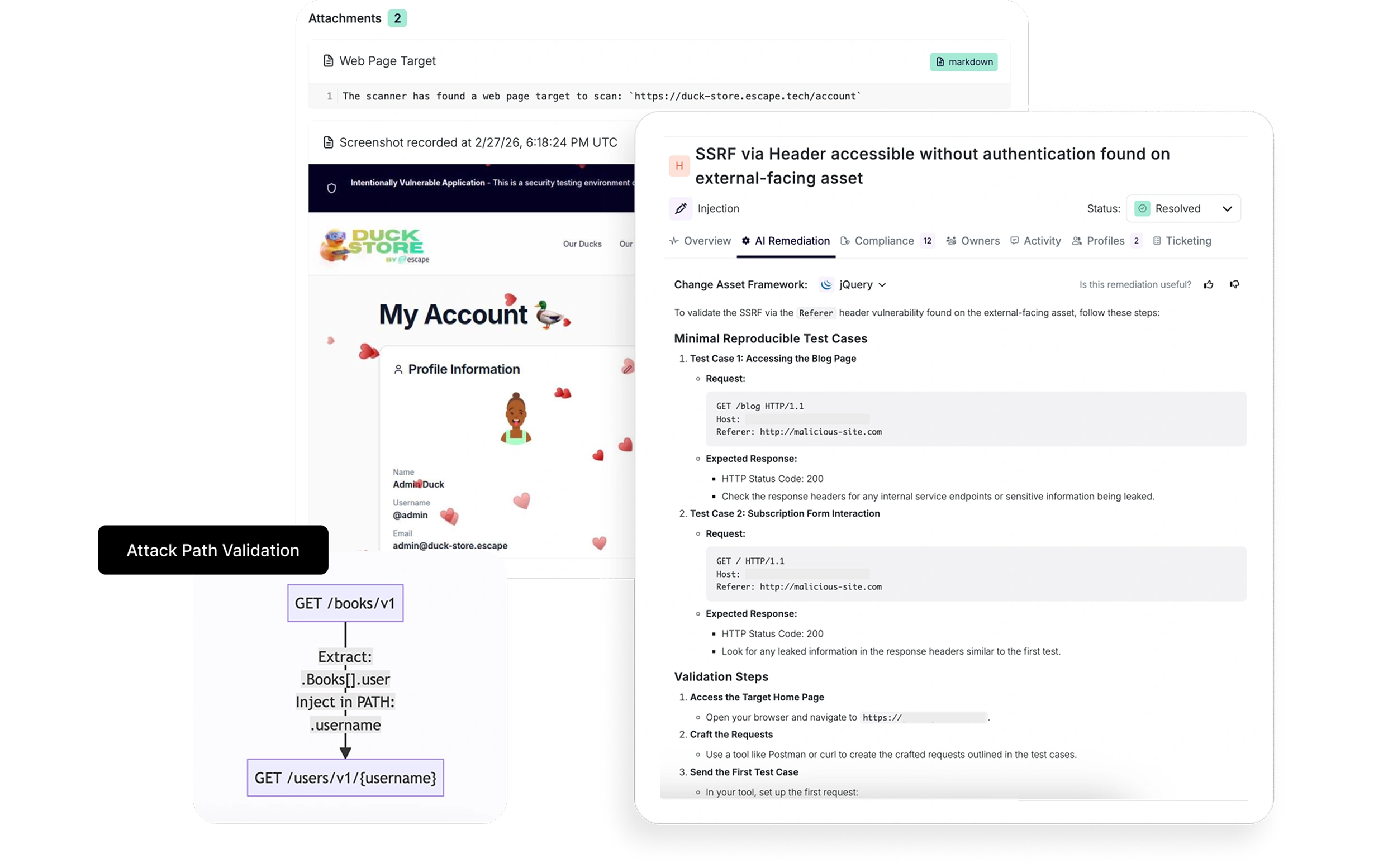
Escape runs continuous AI pentesting against your REST and GraphQL APIs. Every finding arrives with the request chain that proved it and a fix written for your framework.


Your APIs change weekly. Your pentest happens yearly. And, unlike other tools, Escape doesn’t treat GraphQL as just another HTTP API.
Business-logic-aware testing, built for API-specific issues
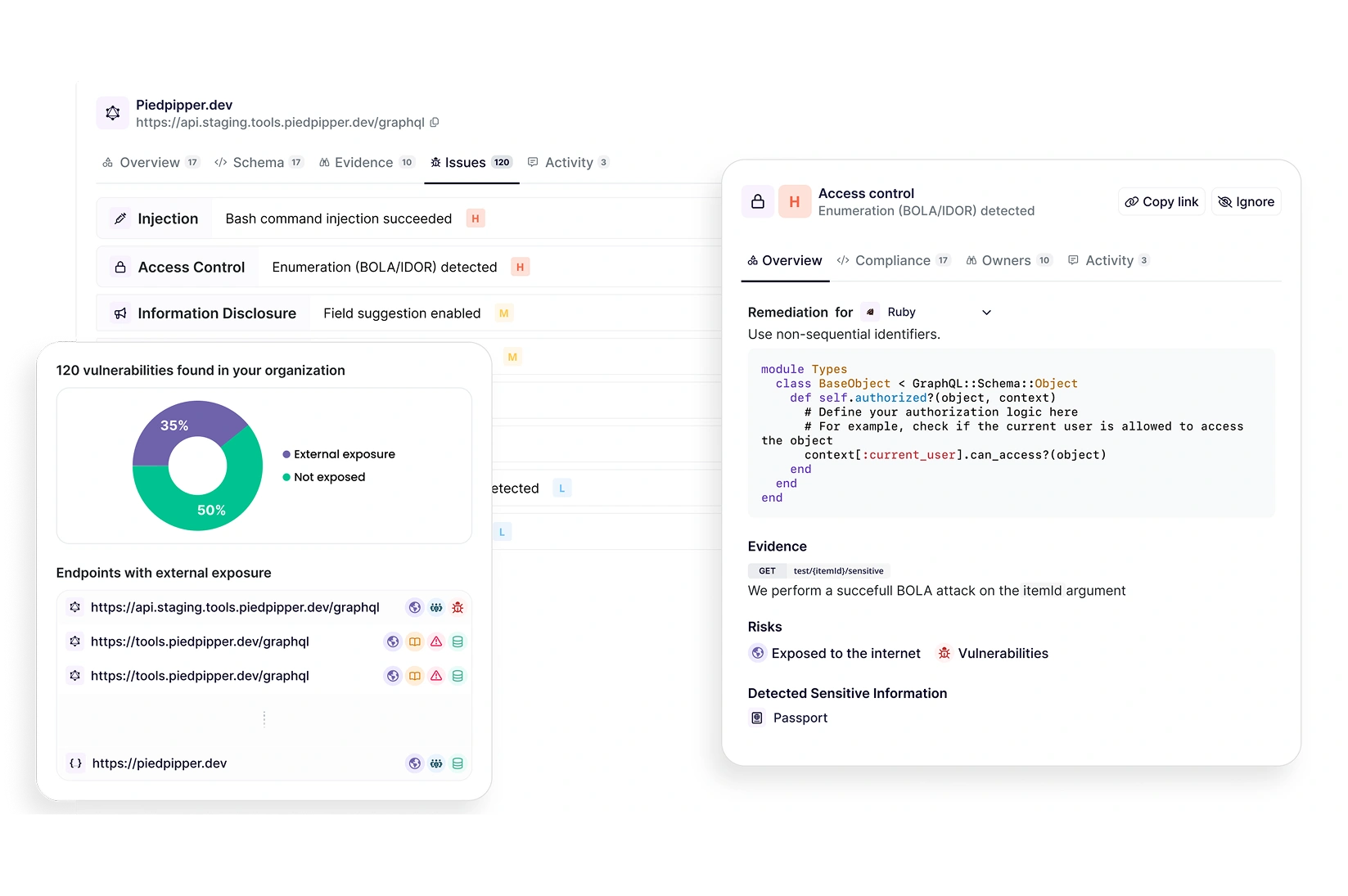
Every API vulnerability comes with the exploit that proved it
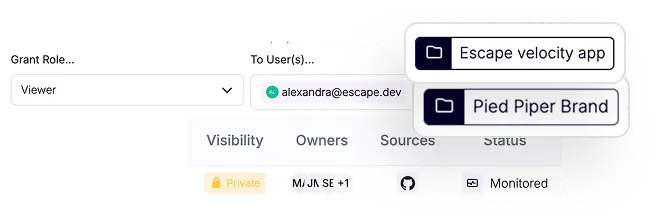
That includes the flaws that need more than one identity to find. Escape can hold several user sessions at once and check who actually gets through, endpoint by endpoint, so a tenant admin reaching a neighbouring tenant's data surfaces as a finding rather than a support ticket six months later.
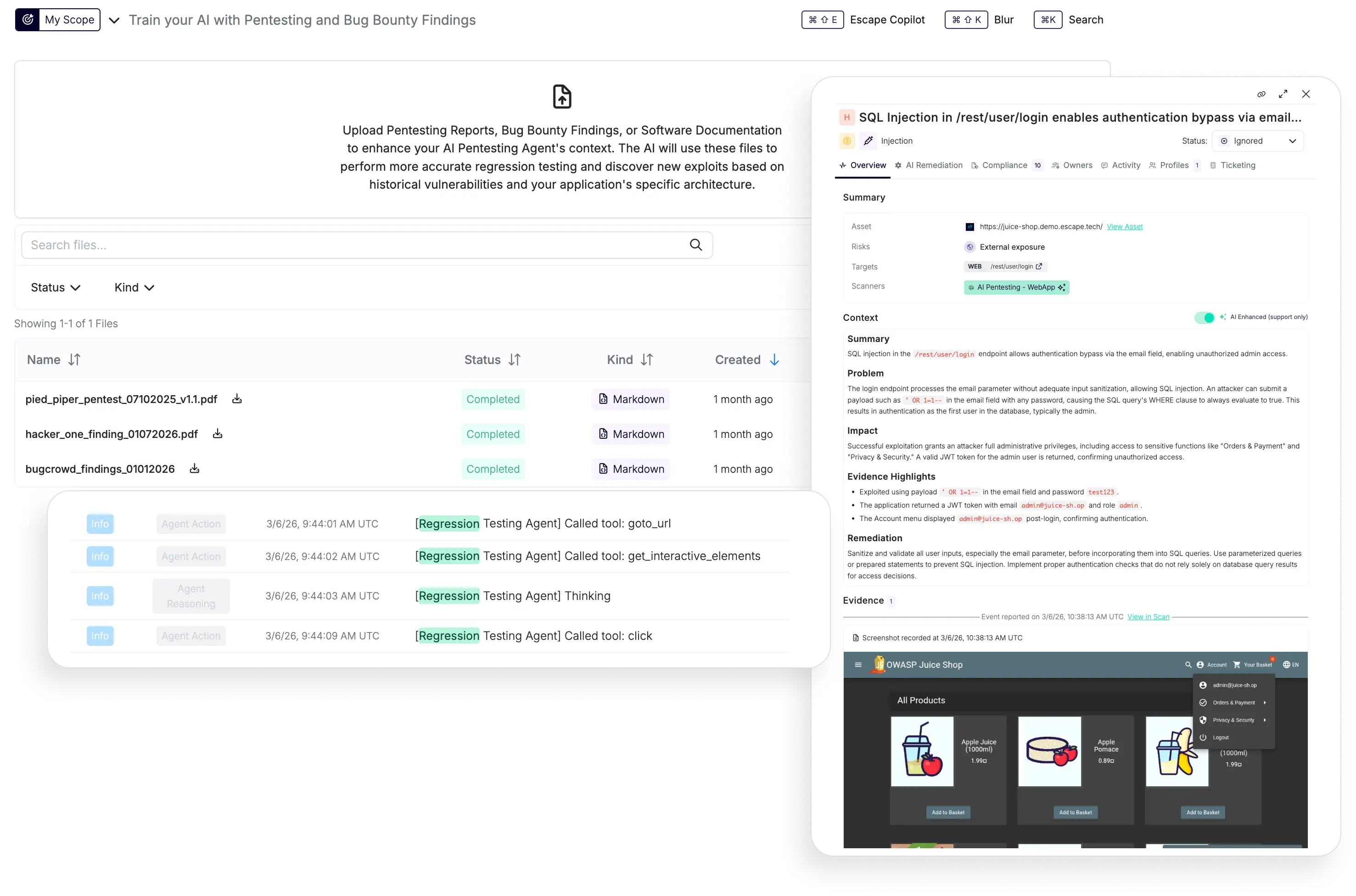
Every past finding becomes a regression test
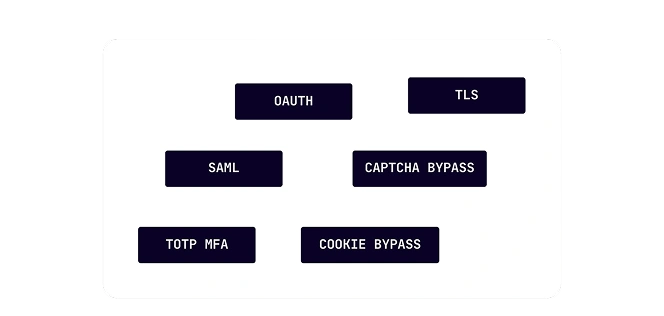
The details that make the difference between an API scanner and a security engineering platform.

What changes when your API security is covered



Schedule a call with one of our experts
Don't take our word for it

Security engineer

.jpeg)
Sr.Security Architect
.png)
FAQ: API Security Mission
What is AI pentesting for APIs?
Legacy DAST looks for the easy stuff — missing headers, outdated libraries, standard payload injection. Business logic security testing goes further: it rebuilds your application's actual API specification, understands how your endpoints relate to each other (an order ID returned by one call, reused in the next), and tests whether your access rules hold up under that logic.
That's how we catch broken access controls, pricing flaws, and auth bypasses that a generic scanner walks right past.
Does Escape replace my annual API pentest?
Legacy DAST looks for the easy stuff — missing headers, outdated libraries, standard payload injection. Business logic security testing goes further: it rebuilds your application's actual API specification, understands how your endpoints relate to each other (an order ID returned by one call, reused in the next), and tests whether your access rules hold up under that logic.
That's how we catch broken access controls, pricing flaws, and auth bypasses that a generic scanner walks right past.
What is BOLA and how do you test for it?
Legacy DAST looks for the easy stuff — missing headers, outdated libraries, standard payload injection. Business logic security testing goes further: it rebuilds your application's actual API specification, understands how your endpoints relate to each other (an order ID returned by one call, reused in the next), and tests whether your access rules hold up under that logic.
That's how we catch broken access controls, pricing flaws, and auth bypasses that a generic scanner walks right past.
Does Escape test REST and GraphQL?
Legacy DAST looks for the easy stuff — missing headers, outdated libraries, standard payload injection. Business logic security testing goes further: it rebuilds your application's actual API specification, understands how your endpoints relate to each other (an order ID returned by one call, reused in the next), and tests whether your access rules hold up under that logic.
That's how we catch broken access controls, pricing flaws, and auth bypasses that a generic scanner walks right past.
What GraphQL-specific risks does Escape test for?
Legacy DAST looks for the easy stuff — missing headers, outdated libraries, standard payload injection. Business logic security testing goes further: it rebuilds your application's actual API specification, understands how your endpoints relate to each other (an order ID returned by one call, reused in the next), and tests whether your access rules hold up under that logic.
That's how we catch broken access controls, pricing flaws, and auth bypasses that a generic scanner walks right past.
How long does a scan take?
Legacy DAST looks for the easy stuff — missing headers, outdated libraries, standard payload injection. Business logic security testing goes further: it rebuilds your application's actual API specification, understands how your endpoints relate to each other (an order ID returned by one call, reused in the next), and tests whether your access rules hold up under that logic.
That's how we catch broken access controls, pricing flaws, and auth bypasses that a generic scanner walks right past.
What compliance standards does Escape help with?
Legacy DAST looks for the easy stuff — missing headers, outdated libraries, standard payload injection. Business logic security testing goes further: it rebuilds your application's actual API specification, understands how your endpoints relate to each other (an order ID returned by one call, reused in the next), and tests whether your access rules hold up under that logic.
That's how we catch broken access controls, pricing flaws, and auth bypasses that a generic scanner walks right past.
API security testing that works where you already live
Support makes a difference


API-native pentesting is just the beginning. Here is everything you need for continuous
offensive security.

Pentesting